Mostrando entradas con la etiqueta new paradigm. Mostrar todas las entradas

sábado, 24 de marzo de 2007

The revolution really has started: More on Patagonia and Wal Mart


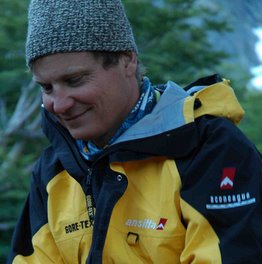
"The revolution really has started," says Yvone Chouniard with a slow, curling and just slightly subversive smile. "I'm blown away by Wal-Mart. If Wal-Mart does one-tenth of what they say they're going to do, it will be incredible. And hopefully America will get a government that we need rather than one we deserve, that will put pressure on business to clean up its act. But the most powerful pressure will come from the consumer. Oh, my God, it's going to be really powerful."

As Chouinard sees it, there's only one downside to this good news: It's probably too late. "There's a race between running out of water, topsoil or petroleum. I don't know what's going to be first. Or maybe it will all happen at once."

Read the Fortune article.

Visit Patagonia Blog

domingo, 18 de marzo de 2007

Wal Mart and Sustainability 360: Greenwashing or true change?

Wal-Mart’s CEO launched “Sustainability 360,” an initiative that involves working with suppliers to reduce packaging by 5% by 2013 – an effort that will be equal to removing 213,000 trucks from the road, and saving approximately 324,000 tons of coal and 67 million gallons of diesel fuel per year.
Wal-Mart's six path strategy focuses on its own environmental footprint and that of its 60,000 suppliers. It has big ambitions to cut the waste sent to landfill, build more energy efficient stores and take "a hard look at what is on our shelves".
The question is: are these thousands of suppliers genuinely trying to understand what sustainability really is? Or are they only changing their practice just enough so as to maintain Wal Mart as a client?
If Wal Mart is strict enough in its policy, and keeps setting higher sustainability standards, does it really matter if suppliers only go after Wal Mart business or if they truly embrace the sustainability phylosophy?
I believe one leads to the other, many companies like Patagonia,
Interface, Natura, American Apparel have found the benefits of sustainable Business practices. Currently, Wal Mart and its suppliers are on the way to discovering this.

Paul Hawken, The author of the Ecology of Commerce, defined in a recent interview that "Sustainability comes when the light bulb goes on and you start to see that we are all involved, that everything is interconnected that your actions affect others", and when we do see this, you longer ask, or discuss, if it is right or wrong, you look for a solution.

100 million customers visit Wal Mart every week, many light bulbs should go on in their stores.

Yvon Chouinard lists Patagonia's values, and with them five steps to action> They are I believe, the five best actions to reach sustainability.

Chouinard's five steps.
read the whole essay

STEP 1: Lead an examined life. Most of the environmental damage human’s cause is a result of ignorance.
STEP 2: Clean up your act. Once you learn the environmental costs, try to reduce them. And when you can reduce them, you must.
STEP 3: Do your penance. No matter how diligent a corporation, it causes waste and pollution.
STEP 4: Support civil democracy. It’s obvious that governments and corporations hold a lot of power, but so do small groups of people who care passionately about an issue and press their cause.

STEP 5: Influence other companies. If you undertake the other steps, this one is a natural. The company that discovers new ways to be more environmentally responsible has an obligation to spread the word to others – to share the knowledge of what can be done.

At this moment Wal Mart is leading the influence movement on other companies,
60,000 of them!.


viernes, 16 de marzo de 2007

Sustainability vs Survivability

I have just discovered a new term in Yvon Chouniard's book "Let my people go surfing".
A concept I had never seen applied before, at least for the human race.

Survivability.

To those that have come to understand the philosophy of sustainability, our greatest fear is that this term, could evolve into a more complex and irreversible situation, much beyond unsustainability.
This more "complex situation" has just been presented to me as: Survivability.


viernes, 9 de marzo de 2007

Muhammad Yunnus: Beyond Grameen Bank

Yunus affirms business schools should start turning out social-business MBAs trained in creating social returns: "People say, 'Don't be stupid.' I say there are a lot of stupid people like me. I don't want to make money. Lots of young people don't want to make money, because their mother, their father made so much money. They don't know what to do with their lives. There are many such kids in the U.S. They don't have any challenge left. Give them the challenge: Fix the world. Create a social business enterprise."

"The new wave in business is, forget corporate social responsibility and philanthropy - how do you integrate this into your core business?" says Yunus.

"The idea Danone has of creating a social dividend for shareholders - that's cutting-edge. No one else has come up with this interesting a model. It supports your brand, returns your capital, you're not going to lose money and you give your shareholders a vision of doing something good." he says.

In the fall of 2005, Yunus invited Danone CEO Franck Riboud to come to Bangladesh and build his first social business enterprise. Riboud listened, then agreed. The yogurt Danone would make would be fortified to help curb malnutrition and priced (at 7 cents a cup) to be affordable. All revenue from the joint venture with Grameen would be reinvested, with Danone (Charts) taking out only its initial cost of capital, about $500,000, after three years.


"I am destroying the culture, yes," Yunus says, beaming mischievously at the thought. "Culture is a dynamic thing. If you stay with the same old thing over and over, you don't get anywhere."

The same applies to Yunus's concept of microcredit. Sticking with the same old idea over and over only gets you so far. To really get somewhere, Yunus says ... well, there's this Big New Idea.


Read the Whole story at CNN.

martes, 27 de febrero de 2007

Chapter seven: The Global Citizen, Sustainable Development Consciousness


“The medium, or process, of our time – electric technology is reshaping and restructuring patterns of social interdependence and every aspect of our personal life. Everything is changing: you, your family, your education, your neighborhood, your job, your government, your relation to the others. And they're changing dramatically".
Marshall McLuhan, communication theorist


A new individual is arising. For two years we have seen these people pass like a shadow, but we haven’t lost their trail. They are people who are conscious of their role in society and participate through the media. And the medium of our era is digital technology.

The new individual is a global citizen who is connected to the world and online. Not surfing but googling. These people don’t passively receive information, but participate – mistrust traditional media, and challenge them.


“Besides breathing, what else do you do more than 3,000 times a day? What you do, or rather what you get done to you, is receive thousands of messages aimed at making you buy something”. Paul Hawken, author of The Ecology of Commerce

The new individual no longer watches a 30-minute news program or spends hours in front of the paper, but rather, on turning his personal computer on every morning (or entering a cybercafé), finds the news services he chose to subscribe to on the screen. He converses online and doesn’t want to be directed. He no longer writes to the paper’s “Readers’ Mail” page, but prefers the immediacy of Internet – and interacting to making speeches.

Signs: We are connected
• In Latin America, cell phones rapidly reached every social class and age group. Considered luxury goods or a working tool a few years ago, cell phones are now used by teenagers to send text messages (SMS) to their friends, by parents to know where their children are, by wives to know at what time their husbands will get home, and by those living in underprivileged neighborhoods, where telephone networks still haven’t arrived.
• Broadband connectivity is likewise reaching critical levels. Some access the new media via their laptop computers or iPods, and the majority of people do so at a cybercafé for less than 20 US cents an hour.
• 40,000 people participated in a cyber-activism campaign in Argentina. Encouraged by Greenpeace, they sent SMS from their cell phones so that Buenos Aires legislators would pass a “zero-garbage” law. It was a success.
• An amazing 500,000 million SMS are exchanged every year worldwide.

From consumer to selector
“By the time he or she finishes high school, an American teenager will have watched 350,000 commercial ads. The average adult watches 21,000 commercials a year. We are taught to identify car models rather than bird species, so much that we can identify a thousand brand logos but less than ten native trees. Besides breathing, what else do you do more than 3,000 times a day? What you do, or rather what you get done to you, is receive thousands of messages aimed at making you buy something,” remarked Paul Hawken in 1992, author, among other books, of The Ecology of Commerce.

The new individual, on the contrary, selects what he consumes, refusing to be overwhelmed and convinced by advertising to buy a certain product. Not accepting sales ads at face value, he wants to have things explained to him, wants to be engaged in dialog, to be heard – and is consequently more and more reluctant towards traditional advertising strategies.

The new individual does not reject consuming, but rather (since there was never so much information available regarding the history behind each product) makes, for the first time, purchase decisions based on companies’ ethical behavior. Pioneer brands such as American Apparel, Patagonia and Camper have made him used to reading labels, to learning which are the clean technologies and how his decisions can make a difference in issues of concern such as environment, labor and health. He is aware, and becomes a fan of trusted brands. He looks for authenticity and reacts strongly against deception and shallowness.

The new individual = The global citizen


Chilean students used SMS, MSN, and other Internet tools to paralyze all the schools in their country. With their students’ strike, they forced Michelle Bachelet’s government to promote a change in educational policies.

Local and global
According to the Pew Internet & American Life Project research entitled “Online Communities: Networks that nurture long-distance relationships and local ties”, some 45 million people who participate in online communities say that Internet has helped them connect with other persons or groups with shared interests, regardless of distance. Research also discovered that these virtual relationships are becoming offline interactions. “Internet also helps people increase their contacts with other people they already know and who live in their community,” the report concludes.

With regard to this, French-Canadian philosopher Hervé Fischer affirms that digital technologies offer more than one alternative to build a society that is more equitable and humanistic: “We have to go from the society of competitive loneliness to the society of shared responsibilities and solidarities. We have to create a ‘hyperhumanism’: a new social model based, like the digital hypertext, on links.”

Glocalization
That’s what the phenomenon is called. It refers to Internet’s aptitude for widening the social world of people who are physically far apart (global level) while at the same time connecting them in a deeper manner with the place they live in and their immediate surroundings (local level). It is thus that users start to gain awareness of problems afflicting their communities and to look for answers to those problems. They start wanting to cooperate, worrying about what happens on the block, at their schools, to their neighbors.

It’s just a few steps from this shared interest to the weaving of a web, a social and digital network. To thinking globally and acting locally.


The new individual:
• Creates.........................................Wikipedia
• Communicates ........................... RSS / Permalink

• Cooperates ..................................Glocalization

martes, 30 de enero de 2007

Chapter two: Sustainability, New media and social revolution tangle together.

A Brief Timeline

Man gets to the Moon and the feat is transmitted worldwide via the television. Shortly before, May 1968 in France had defined the ideas of a whole generation. After the publication of Rachel Carson’s book Silent Spring, the first ecologic organizations, such as Greenpeace, are born, together with the first environmentally-aware brands: Patagonia and Natura.
Some time later, Anita Roddick creates The Body Shop, a pioneer in responsible marketing. With the birth of Ashoka, in 1980, the transformation of the social sector begins. That same year there appears CNN, a 24-hour news channel. And, a year later, MTV and a new visual language. IBM launches the first PC to the market.
The accident of the oil tanker Exxon Valdez has the effect of allowing the ecologic movement to be taken seriously. Marketing begins to massively adopt “green” messages. Activist Chico Mendes is murdered in the Amazonas. The Berlin Wall falls and democratic systems gain footing in Latin American countries, allowing for the creation of citizen groups. The AIDS epidemic also encourages global cooperation in order to fight it.
During the ‘90s, companies such as Shell and Nike face problems for their way of producing, and must render accounts to society with regard to their behavior. Anti-globalization activists get the world’s attention in Seattle. Internet is growing fast and advertising companies begin to investigate online advertising.
The new century begins with the bursting of the dot-com bubble. But, shortly after, the “long tail” paradigm arises. Google makes it possible for small sites to be as important as the big ones. It reaches the whole of the Web, not just the center or the head, but also the ends. Blogs and free software, open to collective participation, are born.
During the terrorist attacks on the London subway, pictures taken with cell phones and promptly uploaded to Flickr, a software for sharing images on the Internet, surpass traditional media coverage both in speed and quality. It is the birth of citizen journalism. Towards the end of the period, Google buys YouTube for 1650 million dollars. Less than a year after its creation, the site created for everyone to upload homemade videos to the Web receives 100 million visits a day. WalMart, the world’s largest supermarket chain, announces its commitment to sustainability.
And the world keeps changing.

domingo, 28 de enero de 2007

Advantages of adopting sustainable practices.


"Because I think that the most important thing to happen this past year was that living and thinking ''green'' -- that is, mobilizing for the environmental/energy challenge we now face -- hit Main Street.
We reached a tipping point this year -- where living, acting, designing, investing and manufacturing green came to be understood by a critical mass of citizens, entrepreneurs and officials as the most patriotic, capitalistic, geopolitical, healthy and competitive thing they could do."


As Thomas Friedman defines in his December 2006 article in the The New York Times, a new set of new behavioral changes are coming.
As in Surf, those who anticipate and prepare for these changes will benefit. Surf is about anticipating changes in the sea, it requires patience and focus on the horizon. Waves come in sets. The best surfers are those who anticipate the wave sets, they row towards the income sea masses in order to position themselves at thebreak pointanddropfor a great ride. Those who don't, either experience a “wipe out”, or are driven to the shore by the braking waves.
Likewise, with the upcoming changes that a new sustainable conscientious consumer will impose, many farsighted companies are looking to adjust their practices to adapt to these behavioral changes.

Some will be in the right spot when changes occur, some won't………


Farsighted


Followers: The next one.


Refusal


Fotos: Carlos Zúńiga www.surfotos.cl

sábado, 27 de enero de 2007

Chapter one. Welcome the most paradigmatic changes in the history of humanity

Rodrigo Baggio is a Brazilian social entrepreneur who has brought informatics schools to the favelas (slums or poor neighborhoods in Brazil) and has already introduced 500,000 people to the digital world through Internet.

American Apparel, a United States company, has achieved a 900% increase in sales in only four years by manufacturing cotton garments without logos, using organic products and paying the highest salaries in the garment industry, which is one of the most competitive.

Iqbal Quadir implemented the Grameen Phone program in Bangladesh, which granted access to cell phones to 8,5 million peasants earning less than a dollar a day. These, in turn, sold the public phone service to their neighbors, and have thus multiplied communication in rural areas over a 100%.

Natura, a Brazilian cosmetics company, has experienced a 32% growth in two years (as opposed to its competitors’ 20%) by centering its strategy in environmental care. Its brand value amounts to 113% of its annual sales, a figure to which giant L’Oréal’s mere 33% barely compares.

The above are just four stories – of individuals whose ideas changed the lives of many others, and of companies that found their competitive advantage in respect for the environment, employees, and consumers, and were rewarded by rocketing proceeds. But there are hundreds of other stories.

Two years ago, we started working with advertising agencies, media, companies, foundations, NGOs, and social entrepreneurs, in an attempt to better understand the tendencies that are transforming the world we live in and the changes they are making in corporate behavior, in governments, and in our lives.

We traveled to Mexico, Brazil, Chile, the USA and Europe to interview the CEOs of a number of companies, several of which are in the communications business, and we set up an Advisory Board consisting of scholars and businesspeople.


We thus detected three currents that converge in the same historical moment and have the potential for generating one of the most paradigmatic changes in the history of humanity:

- The revolution of the social sector: the rise of millions of people, organized in foundations, NGOs, and other associations, that are working and searching for answers for the urgent problems of our societies.

- An arising sustainable development conscience: a new consciousness vis-à-vis the planet, companies and governments, and our way of consuming, producing and living, which is optimistic about the possibilities the former involve, but has and will have a significant impact on corporate action and communications as we know them.

- The participatory media: where audiences no longer wait passively to receive information, but interacts, creates networks and communicates. Internet is today their platform par excellence.

We perceive a type of person that is beginning to see these tendencies, people who aspire to be global citizens and realize that these currents can take them towards the goal they are striving for. People who act responsibly, without ceasing to be “ordinary citizens” – who cooperate in social issues without being activists.

People who actually expect companies to stop “selling” to them and start dialoging – who want companies to be where they are, and to speak their own language, that of the participatory media. People searching for relevant contents to construct a personal history, to be informed, to learn and participate.

We know what these people want. We have the tools and speak the same language. We can communicate. We are no longer “Out There”.
We are here.

miércoles, 24 de enero de 2007

Sustainable Development Communication: Why is it so difficult?

Its a New Paradigm.

People need to see the world from a different perspective.

Until glass was invented people could not see under water.

Glass made things easier, it changed.. or rather it created a new perspective.


So will New Media. It is a matter of time..